Timber is the element most clients arrive certain about and leave surprised by. The species is rarely the interesting part — nearly every premium floor specified in Sydney today is European or Australian oak. What actually decides whether you love the floor in ten years is a short list of unglamorous decisions: board width, wear layer, finish, sheen level and how the boards are fixed to the substrate.
This is the sequence we work through in the studio, and roughly the order in which the decisions should be made.
1 · Board width and length set the mood
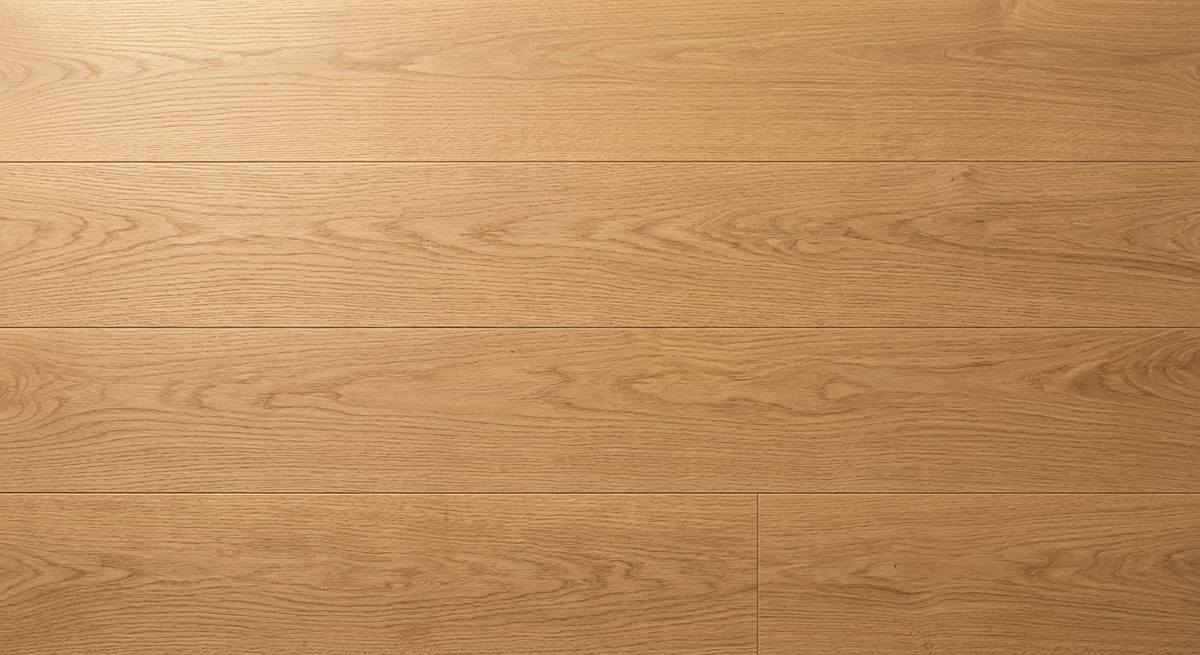
Width changes the character of a room more than tone does. Narrow boards under 140mm read traditional and busy; 180 to 220mm is the current premium standard and suits most Sydney living areas; 260 to 300mm reads calm, architectural and expensive, but needs a flat substrate and a room long enough to carry it.
Length matters just as much and is quietly the biggest difference between good and cheap timber. A pack averaging 1.8 to 2.2 metre boards looks generous; a pack full of 600mm shorts looks restless no matter how good the finish.
2 · The wear layer is the value
On an engineered board, the wear layer is the depth of real hardwood above the tongue — the part that can be sanded back and recoated. Anything at or above 4mm can typically be re-sanded two or three times, which is 25 to 30 years of usable life with a mid-life refresh. Under 2mm should be treated as a fixed finish that cannot be repaired.
This single number is where price differences between two visually identical boards usually live. Ask for it in millimetres, not marketing language.
Two boards can look identical in a showroom and differ by 20 years of service life. The wear layer is the number that tells you which is which.
3 · Finish and sheen decide how it ages
A matte or low-sheen finish is not a style preference in a family home; it is a maintenance strategy. Gloss reflects light along the length of every scratch, so a high-sheen floor shows its history within a year. Matte oils and low-sheen UV lacquers diffuse light and hide fine wear, footprints and dust.
Oiled floors can be spot-repaired without recoating a whole room, which is a genuine advantage in a busy household, but they want re-oiling every few years. Lacquered floors are lower maintenance day to day but are repaired by recoating a whole area rather than a patch.
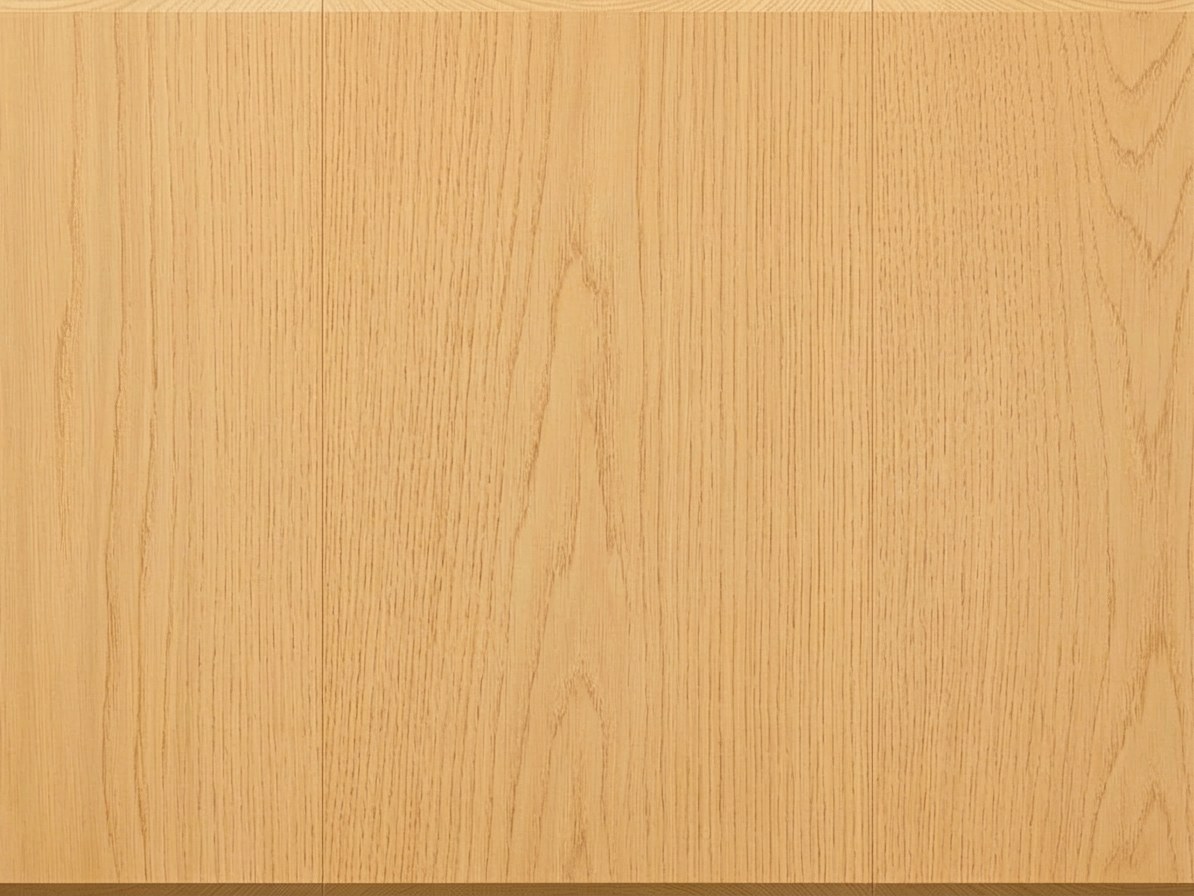
Wire-brushing — running a brush along the grain to lift the soft early wood — adds a subtle texture that hides wear and gives the board a hand-finished quality. It is the single most flattering surface treatment on oak.
4 · Tone against your light, not the showroom's
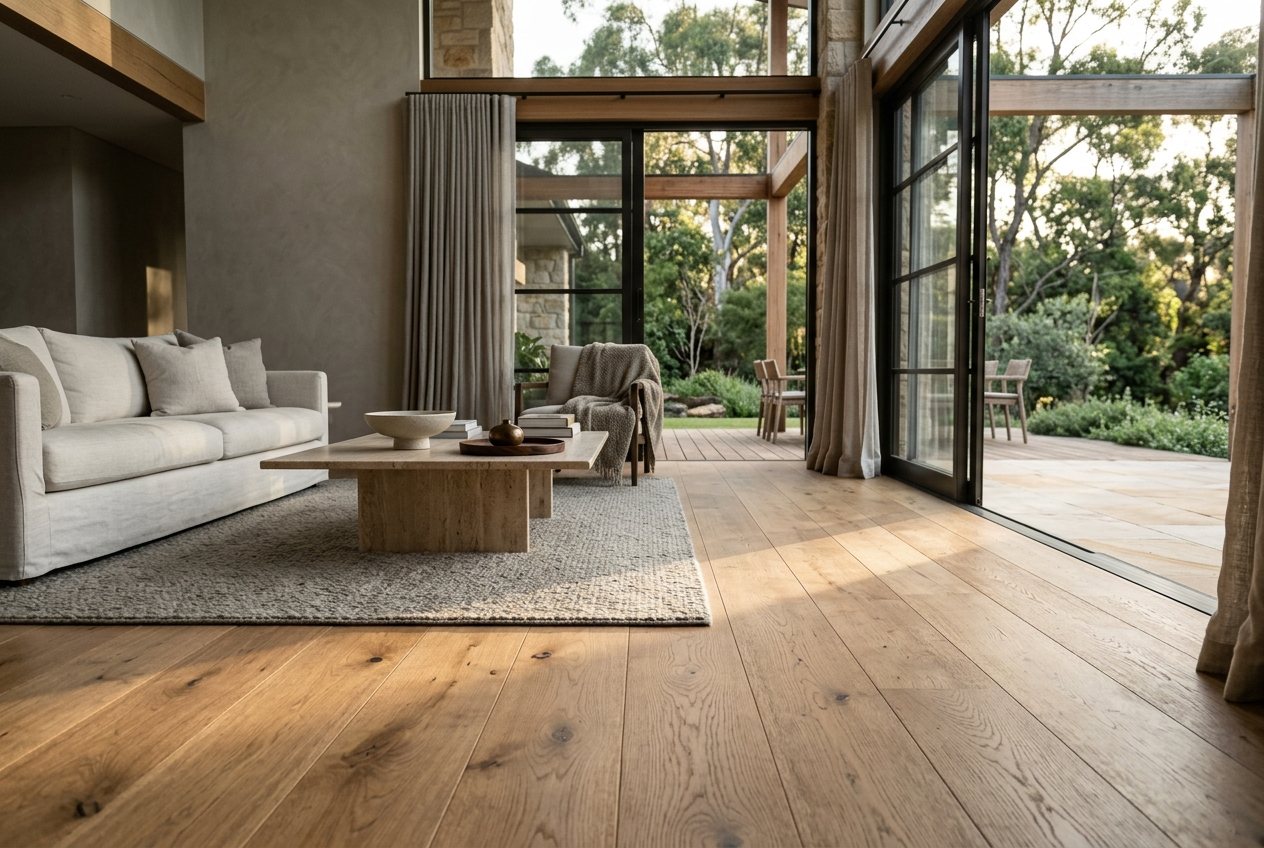
Sydney light is bright and warm, and it will push a floor a shade or two warmer than it appears under showroom halogen. Blonde and natural tones lift darker, south-facing rooms. Mid browns are the most forgiving all-rounders. Deep smoked and fumed tones look superb in rooms with controlled light but show dust and pet hair, and can feel heavy in a small space.
Always view a sample flat on the floor, in the actual room, at two different times of day, and next to your joinery and stone samples rather than on its own.
5 · Fixing, acoustics and underfloor heating
Most Sydney projects are on concrete, and a direct-stick installation using a flexible adhesive gives the most solid, quiet floor underfoot. Floating installations over an acoustic underlay are faster and are often required in strata buildings to meet impact-noise by-laws — check your building's requirements before you order, because they can dictate the entire build-up.
Over underfloor heating, only engineered timber should be specified, the surface temperature must be held below about 27°C, and the system should be brought up and down gradually before and after installation. The adhesive also needs to be rated for heated slabs.
Parquet: herringbone, chevron and Versailles
Pattern floors change the cost structure of a job. The blocks themselves are more expensive per square metre, wastage is higher, and setting-out and installation labour can double. They are also the most memorable floors we specify — a herringbone entry or a Versailles panel in a formal room does work no plank floor can.
If a pattern is on the table, decide early. It affects the direction of the room, the skirting and border detail and the tiler's junctions, and it is very difficult to introduce late in a build.
The short version
- Specify engineered, not solid, for Sydney slabs, apartments and heated floors.
- 180–220mm boards suit most rooms; 260mm+ reads architectural but needs a flat substrate.
- Ask for the wear layer in millimetres — 4mm+ means two to three re-sandings.
- Matte or low-sheen, ideally wire-brushed, hides wear best in a family home.
- View samples flat on the floor in the real room, twice a day, beside your joinery.
- Confirm strata acoustic requirements and heating limits before ordering.
If you would like to work through these decisions against your own plans, the studio keeps the full timber range in Drummoyne and we will put the shortlist on the floor together with the stone, tile and carpet that sit beside it.