Every other floor in a house is manufactured to be consistent. Stone is quarried, and its variation is the entire point — vein, fossil, shell and shift of tone that no printed surface reproduces. It is also porous, it patinas, and it will not pretend to be new forever.
Specified honestly, stone is the most rewarding element in a house. Specified in denial, it is the one clients regret. Here is how we choose it.
The materials, and what each asks of you
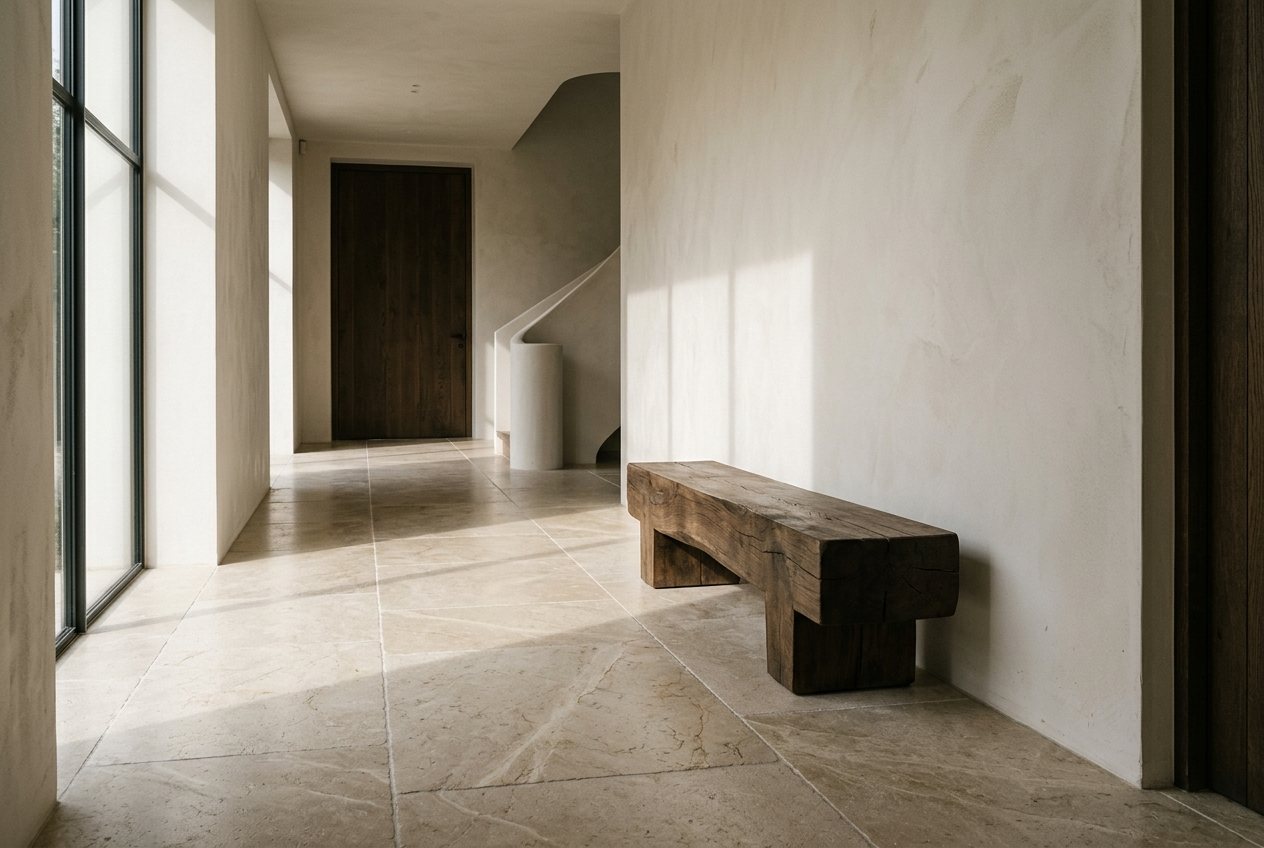
Limestone is calm, soft in tone and beautifully consistent, with a chalky elegance that suits Australian light. It is softer than granite and will patina in traffic — usually attractively — and prefers a honed or brushed finish.
Marble is the most beautiful and the most demanding. It etches on contact with anything acidic, including lemon, wine and many household cleaners, and etching is a dulling of the surface rather than a stain. If a room needs to look untouched forever, marble is the wrong material; if you love a floor that records its life, nothing is finer.
Travertine reads warm and Mediterranean, with a natural pitting that can be filled or left open. It is excellent externally in a tumbled or sandblasted finish and is one of the more accessible natural stones.
Quartzite is the pragmatist's choice: dense, hard, largely acid resistant and often marble-like in appearance. Basalt and bluestone are hard-wearing, quietly modern and superb for entries, alfresco and pool surrounds.
Finish drives both look and performance
Honing gives a flat, matte surface with no reflection — the standard internal finish. Brushing and tumbling add a soft, aged texture that hides wear extremely well. Sandblasting and flaming produce a coarse, high-grip surface for external and wet applications. Polishing maximises depth and colour but also maximises visible etching and scratching, and drops slip resistance significantly.
The same stone can move from roughly P1 polished to P5 sandblasted. Finish, not material, is what determines whether a stone is safe underfoot when wet.
Ask to see the stone in the finish you intend to use. A honed sample tells you almost nothing about how the polished version will behave.
Choosing the batch, not just the stone
Stone is sold in batches from a particular part of a particular quarry, and two batches of the same name can differ noticeably. For larger areas we select the batch and, where the drawing calls for it, arrange bookmatching so vein patterns mirror across a joint or a slab feature.
This is also why the quantity conversation happens early. Ordering a little short and returning for more later is the single most common way a stone floor ends up with an obvious tonal break through the middle of a room.
Sealing and care, realistically
Natural stone is porous, so an impregnating sealer is applied on installation and periodically renewed depending on traffic and exposure. A sealer does not make stone impervious; it buys you time to wipe a spill up before it marks.
Cleaning is simple but non-negotiable: pH-neutral, stone-safe products only. Vinegar, citrus cleaners, bleach and most supermarket sprays will etch or dull calcareous stones like marble, limestone and travertine. Mats at entries, felt pads under furniture and prompt attention to spills do more for a stone floor than any product.
Inside to outside, in one material
Stone's quiet advantage in Sydney is continuity. The same limestone or bluestone can run from the living room through a threshold to the alfresco and pool coping, in a honed finish inside and a sandblasted finish outside — identical material, appropriate grip, no visual break. It is one of the most effective ways to make a modest footprint feel generous.
Externally, salt and chlorine exposure influence the choice, and coping profiles and drainage details need to be decided with the stone rather than after it.
The short version
- Limestone for calm consistency; quartzite and bluestone for durability; travertine for warmth and external use; marble when patina is welcome.
- Finish sets slip resistance and wear: honed inside, brushed or tumbled to hide traffic, sandblasted outside.
- Select the batch, and order the full quantity at once to avoid tonal breaks.
- Seal on installation and renew it; clean with pH-neutral products only.
- Run one stone inside and out in two finishes for continuity from living room to pool.
- If you want the look without the maintenance, a full-body porcelain is the honest alternative — and we will tell you so.
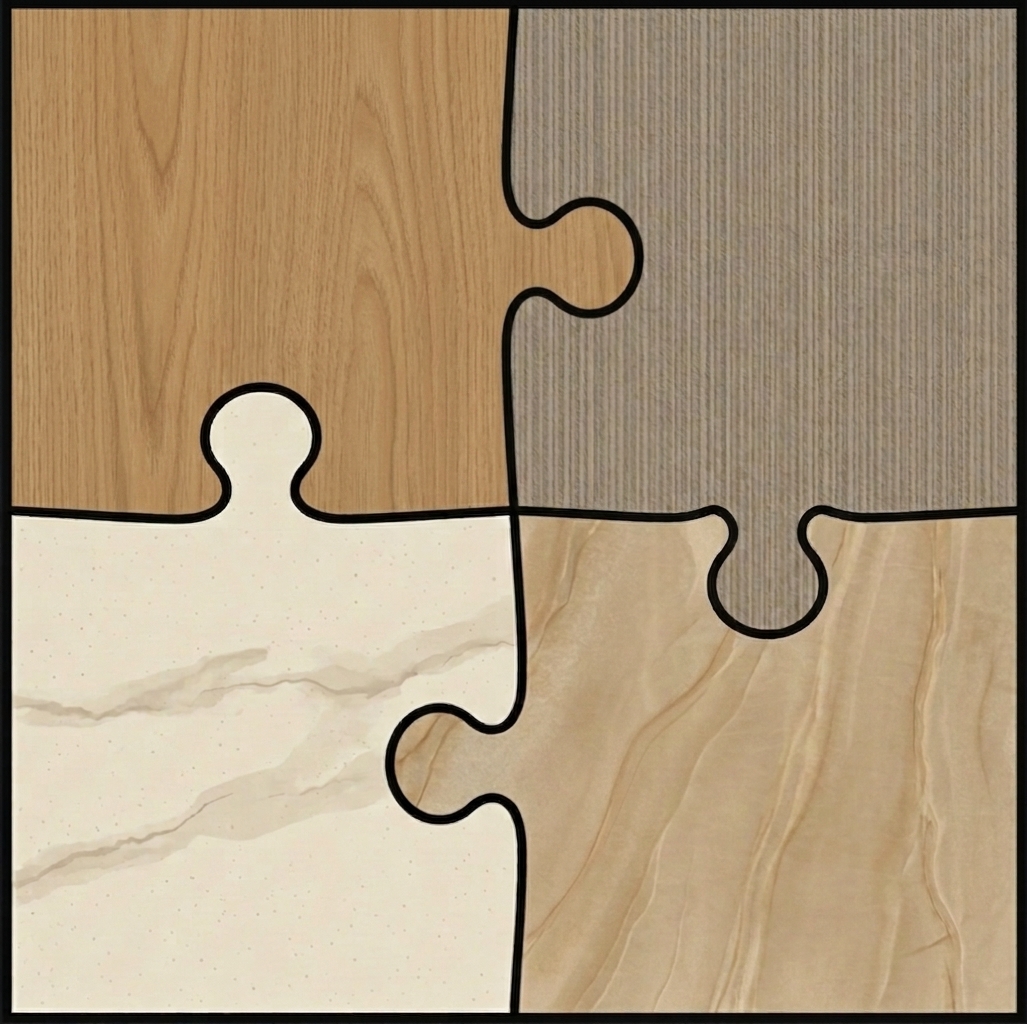
For larger projects we can arrange full slab viewings, and the studio in Drummoyne holds the stone range alongside the timber, tile and carpet so tones can be resolved together rather than in isolation.