Carpet is judged in a showroom by hand and chosen by colour, then lived with for a decade. Almost every disappointment we hear about carpet traces back to one of four specifications that nobody discussed at the time: the fibre, the density of the pile, the twist of the yarn and the underlay beneath it.
Here is how to specify carpet so it still looks like the sample you fell for.
Fibre: wool, wool-rich or solution-dyed
Wool is the benchmark. It recovers from compression, resists soiling naturally, regulates humidity, is inherently flame resistant and ages rather than degrades. New Zealand wool is prized for its whiteness and takes pale, clean colours beautifully. The trade-offs are cost and a sensitivity to prolonged direct sun and heavy pet traffic.
Wool-rich blends, typically 80/20 wool and nylon, keep most of wool's feel while adding abrasion resistance — an excellent compromise for hallways and family rooms.
Solution-dyed nylon and modern hybrids have the colour locked into the fibre itself rather than applied to the surface, so they are highly fade and bleach resistant. Where a room takes brutal sun, kids and dogs, this is often the smarter specification and we will say so.
Construction: loop, cut pile and texture
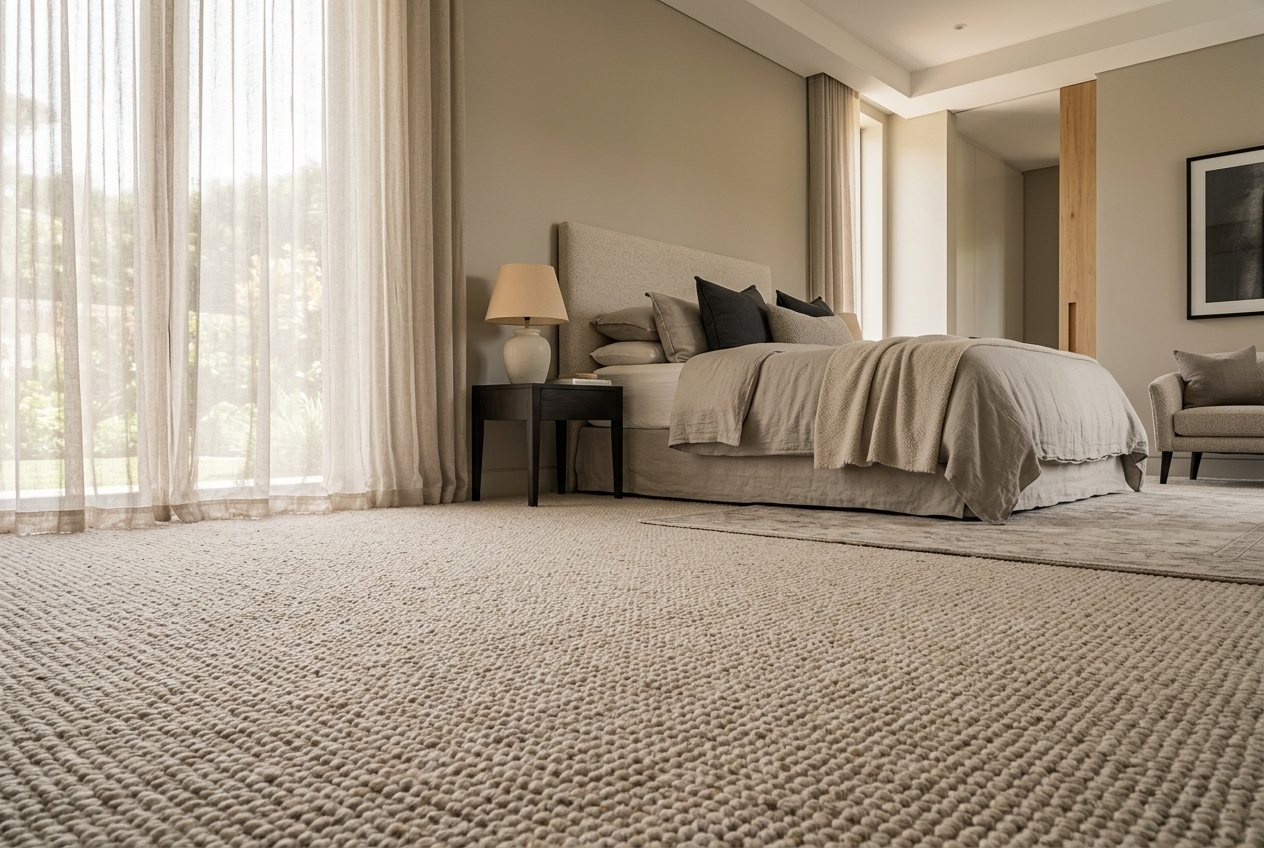
A level loop is tight, hard-wearing and reads architectural — the best all-rounder for traffic. Chunky felted and pebble loops bring real texture and a considered, tactile quality; they are superb in a living room but need to be genuinely dense to hold up in a corridor.
Cut pile is softer and more luxurious underfoot. A short, high-twist cut pile performs well in most rooms; long plush and shag piles are bedroom and sitting-room materials, because they show footprints and crush under traffic.
The numbers that predict wear
Two figures tell you most of what you need to know. Pile weight, in grams per square metre, describes how much yarn is in the carpet — more yarn, more resilience. Twist level describes how tightly the yarn is spun; a higher twist resists untwisting at the tips, which is what causes matting and that dull, shaded look in traffic paths.
Density beats plushness for longevity. If you press your thumb into the pile and feel the backing easily, the carpet will flatten in a hallway regardless of how it feels to stroke.
Underlay is the most under-specified element in a carpet job, and the cheapest way to add years to the floor. Never let it be value-engineered out.
Underlay, stairs and acoustics
Underlay absorbs the impact that would otherwise crush the pile, and it is what makes a carpet feel expensive underfoot. A quality dual-density foam or rubber underlay measurably extends carpet life and dramatically improves footfall noise between levels.
Stairs deserve their own specification. Treads take concentrated wear at the nose, so a firm level loop or short high-twist cut pile is the right choice; deep plush grins and crushes on a stair. In apartments, carpet plus a rated underlay is usually the easiest way to satisfy strata impact-noise by-laws, and we can supply the acoustic test documentation your building manager will ask for.
Colour, and living with it
Mid tones with a subtle fleck or heather hide life better than flat pale or flat dark colours — pale shows soil, very dark shows lint and dust. Take a large sample home and look at it beside your timber and stone selections in daylight, because carpet reads considerably darker on a floor than it does on a vertical display rail.
Practically: vacuum weekly with a beater bar suited to your pile type, treat spills immediately with water and a wool-safe cleaner rather than a supermarket spray, and have the carpet professionally cleaned every 18 to 24 months to keep it within warranty.
The short version
- Wool for bedrooms and formal rooms; wool-rich for hallways; solution-dyed hybrids for sun, kids and pets.
- Density and twist predict longevity better than how plush the sample feels.
- Specify a quality dual-density underlay — it adds years and transforms how the floor feels.
- Stairs need a firm loop or short high-twist cut pile, specified separately from the floor.
- Mid tones with a fleck hide life better than flat pale or flat dark.
- In apartments, confirm the acoustic requirement before ordering; carpet plus rated underlay usually clears it easily.
Bring your plans and your timber or tile selections to the Drummoyne studio and we will match the carpet to them under the same light, with the right underlay specified for each room.